Mineral
or chemical filters: which to choose?
Choosing between mineral and chemical filters isn't about crowning a universal winner. It's really about finding the sun protection you'll apply generously, every morning, without discomfort.
The principle
Understanding the difference between mineral and organic filters
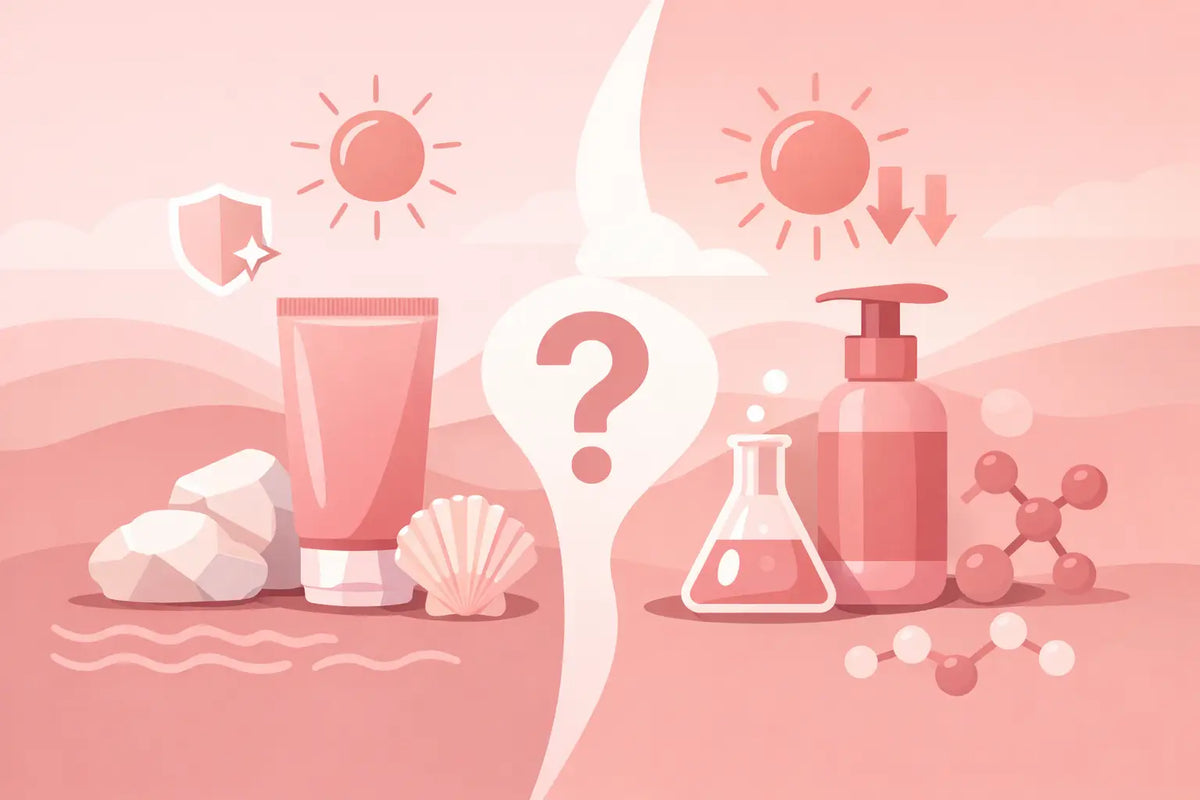
Mineral filters (zinc oxide, titanium dioxide) form a protective film on the surface. Organic filters absorb UV rays and convert them into a less aggressive form of energy. Both offer excellent UVA/UVB protection — the difference comes down mainly to texture and finish.
Option 1
Mineral filters: who are they good for?
Mineral sunscreens often appeal to sensitive or weakened skin. Their main drawback remains a possible white cast on medium to dark skin tones — tinted versions reduce this effect.
Option 2
Organic filters: lightness and an invisible finish
Often loved for how they feel on the skin, they spread easily and vanish without a trace. A real advantage if you wear make-up or live in a hot, humid climate, as on Reunion Island.


By skin type
The right choice for your skin concern
For oily skin, a fine texture with a semi-matte finish is ideal. For dark spots and post-acne marks, aim for very high broad-spectrum protection every day, even under cloudy skies: UVA rays pass through clouds.
“The perfect sunscreen isn't the one that wins a debate about filters, it's the one that becomes the most reliable step in your routine.”
- ONDO BEAUTY Ceramide & Cica Sun Cream for an invisible, comfortable finish
- TOCOBO Vita Waterproof Sun Stick for easy top-ups during the day
- View the full Sun Protection collection →
- Mineral and organic filters both offer effective protection.
- The level of protection matters more than the mineral vs chemical debate.
- Aim for SPF 50+ and a high UVA protection rating.
- The texture that suits you is the one you'll actually apply.
At Haru & Bom, we help you choose the texture that's right for your skin, then use it consistently. Discover our sun protection →