
How to add ceramides
to your skincare routine
Skin that feels tight after cleansing, turns red at the slightest active or looks shiny while still feeling uncomfortable doesn’t necessarily need a longer routine. It often needs to rebuild its barrier. Adding ceramides to your skincare routine supports this essential function without weighing down combination, oily or blemish-prone skin.
Why ceramides change your skin’s balance
Ceramides aren’t a trendy active to use for a few weeks before moving on to the next one. They are lipids naturally present in the stratum corneum, the outermost layer of the skin. When they are well represented, skin holds on to its water better, resists aggressors more effectively and looks smoother, softer and more radiant.
Picture the skin barrier as a wall: skin cells are the bricks, while lipids, including ceramides, are the mortar. When that mortar runs low, water evaporates more easily. Skin becomes uncomfortable, reactive, sometimes rough, and may even produce more sebum to make up for the dehydration.
This imbalance can appear after over-exfoliating, starting a retinol, a flare of inflammatory acne, harsh cleansing or changes in climate. In La Réunion as in mainland France, sun, air conditioning, cold or heating can all increase transepidermal water loss.
Ceramide-rich skincare helps limit this evaporation and strengthen the cohesion of the skin barrier. The result goes beyond surface hydration: skin gradually becomes less fragile in the face of the triggers behind tightness, redness and discomfort. That is also what makes ceramides an excellent ally for active routines.
Who are ceramide products for?
Ceramides suit almost every skin type, but how useful they are and the ideal texture depend on your situation. Dry, sensitive or mature skin will enjoy a rich cream combining ceramides, cholesterol and fatty acids. This combination best mimics the natural components of the skin barrier.
If your skin is combination to oily, look for an emulsion, a light lotion or a barrier serum instead. Ceramides don’t cause breakouts: it is mostly a formula that is too occlusive or too rich for your needs that can bother you. Well chosen, a light texture can actually calm the dehydration that sometimes keeps excess sebum going.

For acne-prone skin using exfoliating treatments, ceramides are especially interesting. Salicylic acid, AHAs or retinoids can deliver great results, but how often you use them must stay compatible with your skin’s tolerance. Adding a barrier product helps you keep up a targeted routine without sliding into a cycle of irritation and inflamed breakouts.
Skin prone to eczema, rosacea or marked sensitivity can also find comfort in them. In that case, choose short formulas, fragrance-free if fragrance is poorly tolerated, and introduce only one new product at a time. In the event of a significant flare or a diagnosed condition, a dermatologist’s advice remains necessary.
How to add ceramides to your skincare routine
The easiest moment is the moisturising step, after water-based products such as toner, essence or serum. A ceramide cream seals in hydration and finishes your evening routine. In the morning, it can also be used before sunscreen, as long as its texture works with your sunscreen and makeup.
There’s no need to stack a ceramide toner, serum and cream from the start. One well-chosen step is usually enough. If your skin is very sensitised, you can opt for a light serum in the morning and a more cocooning cream at night. If it is stable but occasionally dehydrated, a daily cream may be all you need.
A minimalist routine to repair
When your skin stings, flakes or turns red, temporarily reduce what you ask of it. Cleanse with a gentle product, apply a hydrating toner if it is well tolerated, then a ceramide product. In the morning, always finish with broad-spectrum sun protection.

During this phase, pause grainy scrubs, repeated peels and layering strong actives. The goal isn’t to give up retinol or acids for good, but to get back to skin that can handle them. Three to four weeks of consistency can already transform how comfortable your skin feels, even if the pace depends on the initial state of your barrier.
With niacinamide, retinol and acids
Ceramides combine very easily with the most sought-after actives in K-beauty. With niacinamide, they make a very balancing duo: niacinamide notably helps support barrier function and improve the look of pores, while ceramides bring comfort and suppleness.

With retinol, apply a ceramide product after your retinoid serum to limit dryness. If your skin is sensitive, you can use the sandwich method: a thin layer of cream, the retinol, then a second layer of cream. It softens the experience but may slightly moderate the active’s penetration. It’s a good compromise at the start, less essential once tolerance is established.
With AHAs and BHAs, keep a reasonable frequency. An effective exfoliant doesn’t need to be used every day to deliver results. After exfoliating, a ceramide barrier product helps skin get back to a comfortable finish and reduces the risk of that stripped feeling.
Choosing the right ceramide formula
On an ingredient list, ceramides may appear under names such as Ceramide NP, Ceramide AP, Ceramide EOP or Ceramide NG. Their presence is a good sign, but it doesn’t tell the whole story of a formula. Their position in the list, their pairing with humectants and the overall texture matter just as much.
For dehydrated skin, pairings with glycerin, hyaluronic acid, panthenol or beta-glucan are particularly relevant. These ingredients attract and hold water, while ceramides help keep it in the skin. For very dry skin, squalane, fatty acids and cholesterol add welcome nourishment.
Oily skin will often prefer a gel-cream texture, a milky lotion or an emulsified essence. Don’t choose a product only because it promises a matte complexion: if your skin lacks lipids, an overly dry finish can encourage shine during the day. The goal is balanced skin, not skin deprived of comfort.
At Haru & Bom, the most sensible approach is to choose the texture according to your skin and your goal of the moment: repairing after actives, daily hydration, soothing redness or supporting acne-prone skin. The best ceramide cream is the one you’ll want to apply every day, without a suffocating film or a feeling of overload.
The mistakes that keep you from seeing results
The first mistake is confusing ceramides with instant hydration. A hyaluronic acid serum can give a very quick plumping effect, while ceramides work more on the quality of the barrier over time. They require consistency, especially if your skin has been weakened for several months.
The second is changing your whole routine at once. If redness or tiny bumps appear, it becomes impossible to know which product is responsible. Introduce your ceramide product while the rest of your routine is stable, ideally once a day during the first week.
Finally, don’t make up for a weakened barrier with random layers of products. A short, consistent and regular routine often gives better results than piling up actives. If your skin stays uncomfortable despite a gentle routine, also review your cleanser, the water temperature and how often you exfoliate.
- ANUA Peach 77% Niacin Conditioning Milk for light, ceramide-rich hydration on combination to oily skin
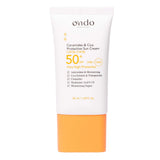
- ONDO BEAUTY Ceramide & Cica Protective Sun Cream to finish your morning routine with broad-spectrum sun protection
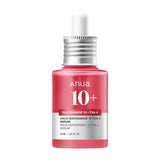
- ANUA Niacinamide 10% + TXA 4% Serum to pair niacinamide and ceramides in a single step
- View the full K-beauty selection →
- Ceramides are lipids found in the outer layer of the skin: they help it hold on to water and better withstand daily stressors.
- They suit almost every skin type: a rich texture for dry skin, an emulsion or light lotion for combination to oily skin.
- One well-chosen step is often enough, at the end of your routine, before sunscreen in the morning.
- They pair easily with niacinamide, retinol and acids, as long as you keep a reasonable frequency.
- Results take consistency: introduce only one new product at a time.
Ceramides don’t promise an artificial overnight glow. They create something more precious: skin that stops reacting to everything, holds on to its hydration better and gradually regains its natural radiance. Start with one step suited to your favourite texture, then give your skin time to grow stronger. Discover the K-beauty selection →