Korean skin barrier cream —
choosing the right one
Does your skin feel tight even though you already use hydrating products? Does it flush more quickly, or sting after a serum? That’s often a sign that a barrier cream is missing from your routine — or that yours isn’t well matched to what your skin really needs.
The fundamentals
Why the skin barrier changes everything
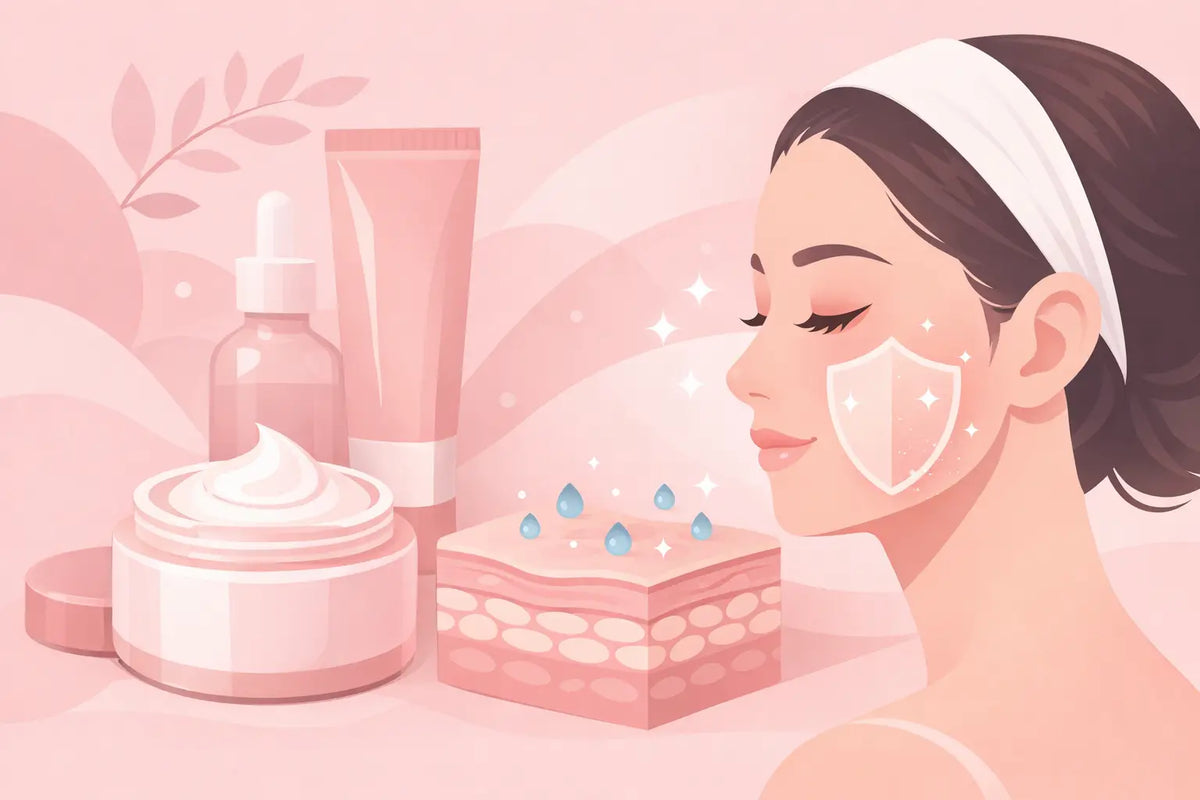
The skin barrier is the protective layer that helps your skin stay supple, comfortable and stable. It limits water loss and acts as a filter against external aggressors. When it’s balanced, skin looks smoother, more luminous and less reactive. When it’s compromised, the signs are tangible: localised dryness, redness, heat, flaking, a thin-skin feeling, or on the contrary, excess compensatory sebum.
This imbalance doesn’t only affect dry skin. Combination to oily, acne-prone or sensitive skin can also have a weakened barrier — often after a routine overloaded with exfoliants, retinol or stripping cleansers, or after marked changes in climate.
“A strong skin barrier is the foundation on which the rest of your routine can work.”
The criteria
What makes a good Korean skin barrier cream?
A good cream isn’t just “rich” or “nourishing”. To support the skin barrier, it must help the skin hold on to water, replace missing lipids and calm the invisible inflammation that keeps discomfort going.
In practice, an effective Korean barrier cream combines several families of actives. Humectants such as glycerin, hyaluronic acid or panthenol draw in water. Biomimetic lipids such as ceramides, cholesterol or certain fatty acids strengthen skin cohesion. Soothing actives such as centella asiatica, allantoin or madecassoside help reduce the feeling of irritation.
Texture matters too. Dehydrated oily skin doesn’t necessarily need a thick balm. A well-formulated, cocooning gel-cream can be enough. Conversely, very sensitised skin will often need a more protective texture.
What to look for
The ingredients to look for first
Ceramides are among the most interesting — they mimic natural components of the skin and help restore its protective function. Panthenol is excellent for soothing and supporting skin repair. Centella asiatica is a safe bet if your skin flushes easily or struggles to recover after active treatments.
Niacinamide can also be useful, especially if you have combination skin or visible pores. Squalane, beta-glucans, ferments or peptides can also make a real difference depending on the formula.
For your profile
Korean barrier cream: which one for your skin type?
Dry or very dehydrated skin
Look for a cream with ceramides, panthenol, squalane and comforting emollients. A rich texture is often welcome, especially in the evening. The goal isn’t just to hydrate in the moment, but to limit water loss for several hours.
Combination to oily but sensitised skin
Many people with oily skin avoid barrier creams for fear of a heavy feel. It’s a common mistake. If your skin is shiny but feels tight after cleansing, you need a light yet repairing texture. Go for gel-creams or emulsions with panthenol, centella, beta-glucan or ceramides in a non-occlusive base.
Acne-prone skin on treatments or strong actives
In this case, the priority is to calm without smothering. The ideal is a minimalist formula, without heavy fragrance, that supports everyday tolerance. That’s often what lets you keep using an active such as retinol or BHA without tipping into irritation.
Sensitive skin with redness
Go for short, soothing formulas with few potential irritants. Centella asiatica, panthenol, ceramides and certain calming extracts are good allies. If your skin heats up or stings after application, the formula isn’t right, even if it ticks every box on paper.
The pitfalls
The most common mistakes
The first pitfall is believing a barrier cream replaces everything else. It helps enormously, but if you’re also using a harsh cleanser, three exfoliants a week and poorly introduced retinol, it can’t make up for all of it.
The second is choosing on texture alone. A thick cream isn’t always more repairing than a lighter but better-built formula. The third is switching products too often. A weakened skin barrier loves consistency.
Our selection
The barrier creams available at Haru & Bom
Soothing cream — sensitive skin and redness

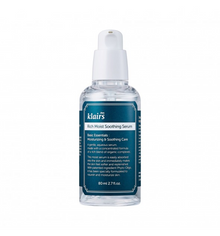
Soothing serum — barrier care before your cream

SOS mask — repair in 15 minutes

Barrier SPF — the protection that completes it all

Adding it without overloading
How to add a barrier cream to your routine
If your skin is sensitised, simplify. A gentle cleanser, a soothing serum if you tolerate it well, then your cream. In the morning, add suitable sun protection. For a few days or weeks, it can help to pause the most stimulating actives.
If your routine already includes niacinamide, vitamin C, AHA/BHA or retinol, the barrier cream becomes the safety net that helps keep things balanced. In K-beauty, this gentle layering approach works particularly well — you don’t force the skin, you support it.
- A weakened barrier shows itself through tightness, redness and stinging after skincare.
- Centella asiatica, ceramides and panthenol — the key repairing actives in K-beauty.
- Even oily skin needs a barrier cream — in a light texture.
- Simplify your routine while repairing — no more stimulating actives.
- SPF50+ protects the repair work — essential on Reunion Island.
- Consistency beats quantity — switching products too quickly stops your skin from recovering.
At Haru & Bom, our selection is designed for real skin that wants to improve without irritation. Explore all our Korean creams →