

How to choose a
soap-free face cleanser
Does your skin feel tight as soon as you pat it dry, get shiny again by noon or suddenly seem more reactive than usual? The problem doesn’t always come from your serum or your cream. To choose a soap-free face cleanser, start by looking at what your cleanser really removes - and what it preserves. A good cleanse removes oxidised sebum, pollution particles, sunscreen and makeup without leaving the skin uncomfortable, red or rough.
In K-beauty, cleansing is seen as the first step that shapes all the others. Stripped skin can produce more sebum, mark more easily and tolerate targeted actives less well. On the other hand, a gentle formula suited to your needs helps the skin barrier stay stable and leaves your complexion clearer, supple and luminous.
Why choose a soap-free face cleanser?
Traditional soap is made by saponification. Its pH is often alkaline, while the surface of the skin naturally has a slightly acidic hydrolipidic film, usually around 4.5 to 5.5. Used frequently, soap can therefore weaken this protective film in some people, especially if the skin is dehydrated, sensitive, prone to redness or treated with exfoliating actives.
A soap-free cleanser, sometimes called a syndet, relies on milder surfactants. It doesn’t clean less well: it cleans differently. The goal is to capture impurities and excess sebum while limiting that squeaky-skin feeling. The famous “clean at all costs” effect is not a sign of performance. It’s often a signal that the skin has lost too many protective lipids.
Be careful, though, not to turn “soap-free” into a universal promise. A formula can be soap-free and still be too fragranced, too rich in essential oils or too stripping for your skin. Conversely, some very oily skin types enjoy a fresh, purifying foam. The right choice depends on the full formula, your routine and how your skin reacts over several days.
Choosing a soap-free face cleanser for your skin type
Texture often gives a first clue. Gel, foam, cream, oil or powder: none is intrinsically better. Above all, it should match your sebum level, your sensitivity and what you wear during the day.
Oily skin, visible pores and blemishes
If your skin gets shiny quickly, has blackheads or inflamed blemishes, look for a gel or foam with a physiological pH that cleans effectively without triggering a sebum rebound. Actives such as salicylic acid, betaine salicylate, tea tree oil or centella asiatica can be worthwhile depending on your tolerance.
Salicylic acid is useful for unclogging pores, but it doesn’t need to be in every product of your routine. If you already use a BHA exfoliant or an anti-blemish serum, a gentle soap-free cleanser is often enough for daily use. Piling up purifying actives can increase redness, flaking and post-inflammatory marks.

Combination and dehydrated skin
This is the profile that calls for the most nuance: shiny areas don’t necessarily mean the skin can handle everything. Combination skin can lack water and compensate with more visible sebum production on the T-zone. Go for a low-foaming gel or a creamy foam containing glycerin, hyaluronic acid, panthenol or soothing extracts.

After rinsing, your skin should feel comfortable, not necessarily matte. If your cheeks feel tight but your nose is shiny, avoid very astringent cleansers. A gentle cleanse followed by a hydrating lotion often does more to balance the skin than a product that tries to remove every trace of sebum.
Dry, sensitive or redness-prone skin
Favour cream, milk or jelly textures, with mild surfactants and ingredients that support the skin barrier: ceramides, squalane, panthenol, beta-glucan, oat or centella asiatica. Minimalist formulas, fragrance-free or with few potential irritants, are often easier to introduce when the skin reacts quickly.
In the morning, a simple rinse with lukewarm water can sometimes be enough if your skin is very dry and you only applied skincare the night before. This isn’t an absolute rule: if you sweat a lot, live in a hot and humid climate or use a very rich cream, a gentle cleanser is still relevant. Watch how comfortable your skin feels rather than following a fixed routine.
Normal skin or dull complexion
Skin with no major concerns has every reason to protect its balance in order to keep it. A gentle soap-free cleanser with antioxidants, soothing plant extracts or a pleasant sensory texture makes an excellent base. If your complexion lacks radiance, don’t rely only on the cleanser: its contact time is short. Hydration, sun protection and measured exfoliation will generally have more impact.
Ingredients to look for, and those to put in context
On an INCI list, mild surfactants can have technical names such as coco-glucoside, decyl glucoside, sodium cocoyl isethionate, sodium methyl cocoyl taurate or disodium cocoamphodiacetate. You don’t need to memorise the whole list. Above all, look for a good feel after several uses: no stinging, no dry patches and no lasting tightness.
Glycerin and hyaluronic acid bring comfort, while panthenol, allantoin and centella soothe weakened skin. Ceramides are particularly interesting when the skin barrier has been weakened by cold weather, anti-acne treatments or over-exfoliation.
Fragrances and essential oils are not automatically off-limits. Many skin types tolerate them very well. But if you have rosacea, eczema, sensitised skin or recurring stinging, a fragrance-free formula is often the more cautious choice. Same logic with denatured alcohol: its presence isn’t always a problem, but a formula that contains a lot of it may be less comfortable for dry or irritated skin.
The right cleansing method also changes the result
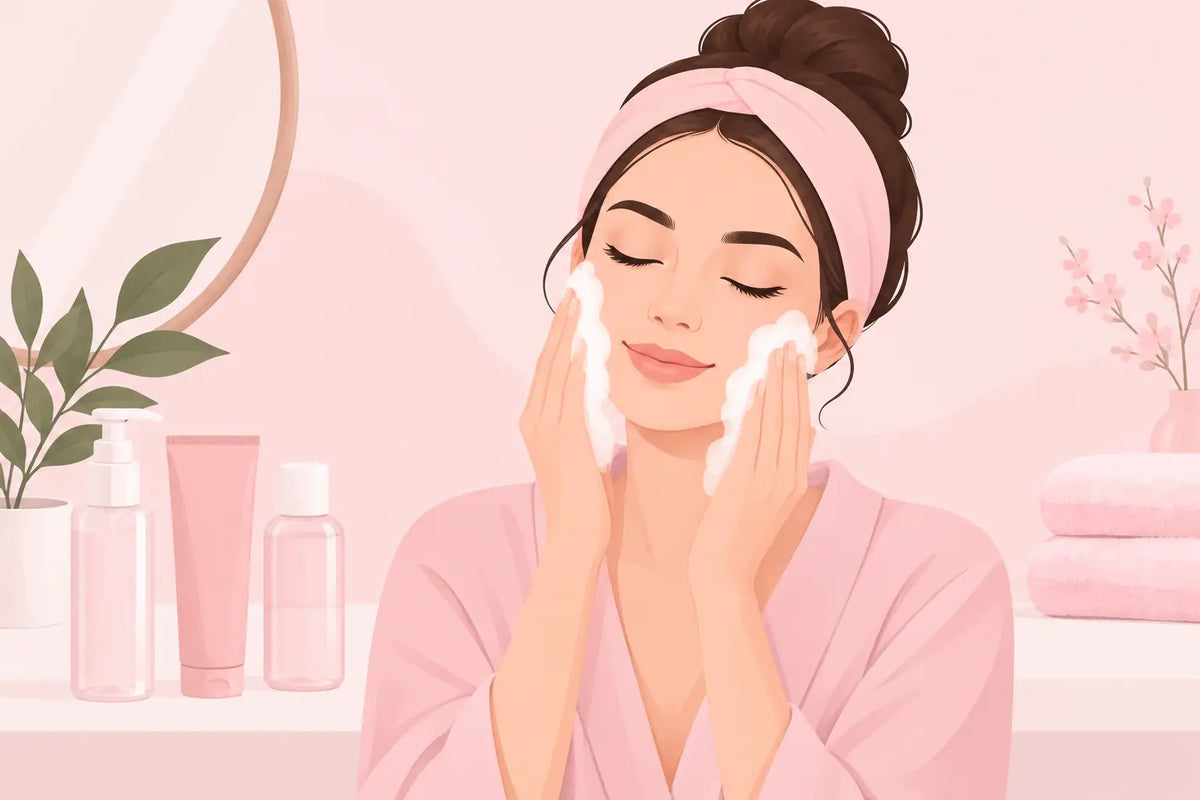
Even the best cleanser can become irritating if it’s used for too long or with water that’s too hot. Wet your face with lukewarm water, emulsify a small amount between your hands, then gently massage for about thirty to sixty seconds. Focus on the sides of the nose, the jawline and the hairline, without scrubbing with a harsh brush or a rough towel.
In the evening, double cleansing is particularly useful if you wear long-wear makeup, water-resistant sunscreen or live in a very polluted environment. Start with a cleansing oil or balm, then follow with your water-based soap-free cleanser. This combination often avoids having to insist with a single gel cleanser, which is kinder to the skin.

However, double cleansing is not a must every morning, nor a required step for every skin type. If you wear neither makeup nor stubborn sunscreen and your skin feels weakened, a single gentle cleanse in the evening is sometimes the most balanced option.
How do you know if your cleanser really suits you?
Give it one to two weeks, unless you experience burning, clear irritation or an unusual reaction. A suitable formula leaves a comfortable clean feeling and lets your next products go on without stinging. Your complexion looks more even, dry areas don’t spread, and sebum doesn’t seem to come back excessively a few hours later.
Conversely, immediate tightness, skin that turns red after every wash, small flakes around the nose or a breakout linked to a weakened barrier are signals to listen to. In that case, simplify: a soothing soap-free cleanser, a hydrating lotion, a barrier cream and sun protection can already make a real difference.
- MEISANI Puri-Tea Salicylic Acid Cleansing Gel for oily, blemish-prone skin, if your routine doesn’t already include a BHA exfoliant
- Beauty of Joseon Green Plum Refreshing Cleanser for combination, dehydrated skin that needs a gentle, comfortable gel
- Dear Klairs Gentle Black Deep Cleansing Oil for the first step of your evening double cleanse, before your soap-free cleanser
- See the full K-beauty selection →
- Traditional soap often has an alkaline pH, while the skin’s surface is slightly acidic, around 4.5 to 5.5.
- “Soap-free” is not a universal promise: what counts is the full formula and how your skin reacts.
- After rinsing, your skin should feel comfortable, not necessarily matte.
- Massage for 30 to 60 seconds with lukewarm water; double cleansing is useful in the evening with long-wear makeup or water-resistant sunscreen, but it isn’t mandatory.
- Give your cleanser one to two weeks, unless you experience burning or clear irritation.
At Haru & Bom, the idea isn’t to choose the most spectacular cleanser, but the one that prepares your skin to comfortably receive the rest of your routine. When cleansing respects your balance, actives like niacinamide, AHA/BHA or retinol have a much better chance of revealing a clear, even and lasting glow. Discover the K-beauty selection →


