
How to fade
post-acne marks?
A breakout can disappear in a few days, but the mark it leaves behind often lingers far longer. The real challenge isn't doing more — it's doing it more precisely. Between hyperpigmentation, persistent redness and a sensitised skin barrier, strategy matters as much as products.
Understand post-acne marks before trying to correct them
Not all post-blemish marks are alike. Some are brown, greyish or dark beige: this is often post-inflammatory hyperpigmentation. Others stay red or pink for weeks: this is more likely post-inflammatory erythema.
Brown marks appear when inflammation triggers excess melanin production. Red marks are linked to dilation or fragility of the small blood vessels after inflammation.
How to fade post-acne marks without harming your skin
The best approach rests on three pillars: calming inflammation, speeding up skin renewal in moderation, and protecting your skin every day.
Niacinamide, the all-round ally
If you want to improve dark spots, excess sebum and an uneven skin tone all at once, niacinamide remains a very safe bet — it regulates sebum, supports the barrier and slows melanin transfer.

AHAs and BHAs: useful, but dose carefully
Chemical exfoliation can speed up skin renewal. But this is where overdoing it happens most often — stacking an exfoliating toner, an acid serum and a keratolytic cleanser in the same week won't fade marks any faster; it can weaken the skin barrier.


Soothing actives matter more than you'd think
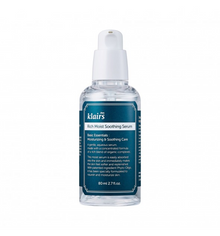
Centella asiatica, ceramides, panthenol or allantoin aren't anti-dark-spot actives in the strict sense, but they play an essential role. Soothed skin recovers better, tolerates corrective products better and marks less after each breakout.
The routine that really works
In the morning, keep it light: a gentle cleanse if needed, a serum targeted to your goal, a moisturiser, then sun protection — non-negotiable if you want your marks to fade.

In the evening, alternate according to your tolerance between a gentle exfoliant, a retinol treatment or an evening-out serum. There's no medal for the most loaded routine.
The mistakes that make marks last longer
The first: picking at breakouts. Squeezing, scratching or pulling off scabs significantly increases the risk of a persistent mark, or even a scar. The second: confusing tingling with efficacy.
How long before you see an improvement?
The answer depends on how deep the marks are, your skin phototype, your level of inflammation and how consistent your routine is. Some recent marks fade within a few weeks. Others take two to three months, sometimes longer.
- Niacinamide + TXA — ANUA Niacinamide 10%+TXA — 24,90€
- Exfoliant — COSRX AHA/BHA Toner — 28,90€
- Renewal — MEISANI Blue Elixir Retinol — 24,90€
- View the Hyperpigmentation collection →
- Brown marks (melanin) and red marks (blood vessels) aren't treated in exactly the same way.
- A strong product doesn't speed up results — it can even delay them by irritating your skin.
- Niacinamide, AHA/BHA and retinol are effective, but require careful dosing and patience.
- Daily SPF is a must — without it, marks can darken and last longer.
- Allow several weeks to several months, depending on how deep and how old the marks are.
At Haru & Bom, we select textures and actives that can correct without triggering irritation again. Discover our anti-dark-spot selection →